 ☰ Menu
Finna Sensors makes on-line and handheld moisture sensors for gypsum board manufacturing. Our OMNIR near-infrared (NIR) sensor monitors moisture during raw gypsum drying and calcining. Our SMART III radio frequency (RF) sensor measures boards inside and outside the kiln, and our handheld meters provide spot checks on finished board.
The OMNIR NIR sensor from Finna Sensors provides the accurate data you need to manage moisture levels during the raw gypsum rock mining, drying and calcining stages of the gypsum board manufacturing process.
Explore the OMNIR Sensor's CapabilitiesFinna’s SMART III RF moisture sensor can withstand temperatures of up to 485°F (250°C), making it the ideal solution to monitor moisture levels during the kiln drying stage of the gypsum board manufacturing process.
Explore the SMART III RF Sensor's CapabilitiesGypsum board is one of the most common materials used in building projects. Commonly referred to as drywall or wallboard, gypsum board consists of a hardened gypsum (calcium sulfate dihydrate) core with paper or fiberglass mat surfaces. Gypsum board is a popular building material due to its cost-effective construction and fire-resistant properties. According to the U.S. Geological Survey, wallboard sales in the United States reached an estimated 26 billion square feet in 2025.
Both natural and synthetic gypsum can be used to manufacture gypsum board. Natural gypsum is mined from quarries and is the largest source of U.S. gypsum supply, while synthetic gypsum made up approximately 39% of that supply in 2025.
Natural gypsum provides a dependable long-term source of raw material that is compatible with all established gypsum board formulations. However, it requires permits to mine, and there is often variability among the material found in different gypsum mines.
Synthetic gypsum, also called FGD (flue gas desulfurization) gypsum, is produced as an industrial byproduct in coal-fired power plants. When wet scrubbers are used at coal plants, the sulfur dioxide in flue gas reacts with a limestone slurry to form calcium sulfite. The calcium sulfite is then oxidized to create calcium sulfate (gypsum). Once processed, synthetic gypsum is very pure and uniform, making it an effective substitute for natural gypsum in many applications, including drywall. However, it typically arrives at the plant with much higher moisture content than natural gypsum, so it must be dried before calcining.
| Natural gypsum | Synthetic (FGD) gypsum | |
|---|---|---|
| Source | Mined from quarries | Byproduct of flue gas desulfurization (FGD) at coal-fired power plants |
| Purity | Varies by mine; may contain clay, silica, carbonates or salts | Often above 95% calcium sulfate dihydrate; wallboard plants typically require at least 92% |
| Moisture on arrival | Lower | Higher; wallboard plants typically require 10% or less, and it usually needs extra drying |
| Share of U.S. supply (2025) | About 61% | About 39% |
| Supply trend | Long-term reserves; new mines require permits | Flat in recent years as coal-fired power generation declines |
Sources: U.S. Geological Survey (2026); Power Engineering; Walls & Ceilings
Gypsum board is manufactured by enclosing a gypsum-based slurry between two paper or fiberglass facers. The board is then cut into panels and dried in a kiln. This multi-stage process requires precision at every step to ensure the finished drywall sheets possess the quality and consistency necessary for use in building projects. In addition, moisture control is required throughout the process to reduce the risk of rejected boards and ensure the final product has the proper:
The stages of the gypsum board manufacturing process include:
Four stages during the manufacturing process require precise moisture control. Too much or too little moisture during any of these stages can raise fuel costs or cause defects in the finished board.
| Stage | Too Much Moisture | Too Little Moisture |
|---|---|---|
| Raw Gypsum Drying | Longer drying times and higher gas usage. Moisture carried into the calciner can cause uneven calcining. | Over-drying wastes fuel. Excess heat can start calcining the gypsum before it reaches the calciner. |
| Calcining | Under-calcined gypsum keeps too much combined water, which can make the board core set unpredictably. | Over-calcined gypsum loses too much combined water. It reacts slowly and can weaken the board core. |
| Slurry Mixing | Excess water has to be removed in the kiln, which raises fuel use. It can also lower core density and strength. | The slurry doesn’t flow well, which can cause voids in the core and poor edge formation. |
| Kiln Drying and Finishing | Warping, shrinkage, softer edges and paper delamination. Wet boards also carry a higher risk of mold, especially in damp storage. | Over-drying recalcines the core near the paper or mat, which weakens the bond. It can also cause brittle or crumbling edges and wastes fuel. |
At Finna Sensors, we provide moisture measurement solutions for the key stages of the gypsum board manufacturing process.
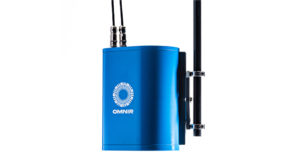 The OMNIR on-line near-infrared (NIR) moisture sensor measures moisture without touching the material, with ±0.1% accuracy across a 0.1–95% moisture range. It provides continuous readings during the raw gypsum drying and calcining stages:
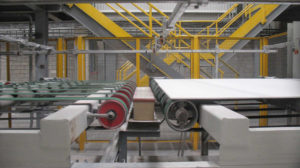 The SMART III RF moisture sensor measures moisture inside the kiln, where it can withstand temperatures up to 485°F (250°C). It helps you confirm boards reach less than 1% moisture without over-drying, allowing you to identify moisture problems before boards ship. More than 200 SMART III sensors are installed in commercial production lines across multiple industries.
Explore the SMART III RF Sensor
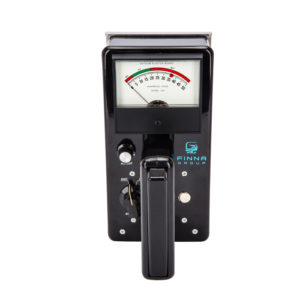 For spot checks during production, in storage and after installation, our pinless handheld meters measure moisture in gypsum board without damaging it:
Finna Sensors has built moisture measurement tools for the gypsum board industry for more than 75 years. Founded in 1933 as the Moisture Register Company, we introduced our first on-line RF moisture meter for gypsum board production in the late 1940s. Today, gypsum board manufacturers across North America, Europe, Asia and the Middle East use our sensors.
Gypsum manufacturers that have used our sensors include USG, National Gypsum, Georgia-Pacific, CertainTeed, Knauf, American Gypsum, PABCO Gypsum and Etex.
Finished gypsum board is typically dried to less than 1% free moisture before it leaves the plant. Boards with too much moisture can warp, shrink or lose their paper bond. Boards that are over-dried can develop brittle edges and a weaker bond between the core and the facer. The SMART III RF moisture sensor measures board moisture inside the kiln, so your operators can adjust the drying process to achieve the proper moisture content before boards ship.
Synthetic gypsum from coal-fired power plants arrives with much more free moisture than natural gypsum. Wallboard plants typically require synthetic gypsum to be delivered with 10% moisture or less. Even at that level, the gypsum must be dried before it can be ground and calcined. Wet feed material raises fuel use in the dryer and can lead to uneven calcining. The OMNIR near-infrared (NIR) sensor monitors moisture during drying so your operators can control the dryer temperature.
Most gypsum board plants benefit from both, because each technology suits a different stage. Near-infrared (NIR) sensors such as Finna’s OMNIR measure moisture without touching the material. That makes them a good fit for raw gypsum and calcined gypsum moving through the dryer and calciner. Radio frequency (RF) sensors such as Finna’s SMART III are designed for thicker board products. They can operate inside the kiln to measure finished boards.
Yes. Finna’s SMART III RF moisture sensor is built to operate inside a kiln or dryer at temperatures up to 485°F (250°C). It gives your operators continuous, non-destructive moisture readings in the final zones of the kiln. That helps confirm boards are dry enough without over-drying them.
Free water is loose moisture held on or between gypsum particles. Combined water is chemically bound inside the gypsum crystal. Pure gypsum contains about 20.9% combined water by weight. Calcining removes about three-quarters of it, which turns gypsum into stucco (hemihydrate) with about 6.2% combined water. Plants measure free water to control drying and combined water to check how completely the gypsum has been calcined.
Request a quote for gypsum board moisture sensors at your manufacturing facility. Our team can supply the NIR, RF and handheld sensors you need to maintain proper moisture control throughout the process.
"*" indicates required fields
Copyright Finna Sensors 2026
 Cart
Cart

 by Webolutions